
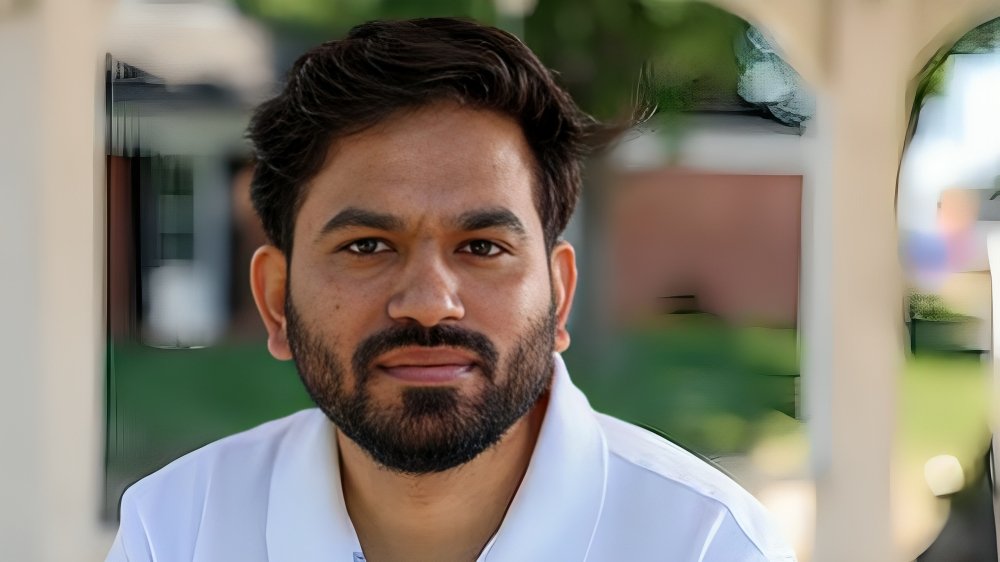
Abhijeet Dipke has become one of the most searched names in Indian politics right now. He is the founder of the Cockroach Janta Party, a movement that began as online satire and grew into one of the largest youth-led protests India has witnessed in years.
Search interest around him keeps growing every week. People want to know his age, his background, his caste, and how a single social media post turned him into a national figure. This article covers all of that in detail, using only verified facts.
Quick Facts: Abhijeet Dipke
| Attribute | Details |
| Full Name | Abhijeet Bhagwan Dipke |
| Age | 30 years old |
| Date of Birth | September 29, 1995 |
| Zodiac Sign | Libra |
| Place of Birth | Aurangabad (now Chhatrapati Sambhajinagar), Maharashtra |
| Nationality | Indian |
| Education | Bachelor’s in Journalism (Pune); M.S. in Public Relations, Boston University |
| Profession | Political Communication Strategist, Digital Creator, Activist |
| Known For | Founder of the Cockroach Janta Party (CJP) |
| Caste | Dalit |
| Parents | Bhagwan Dipke and Anita Dipke |
| Net Worth | Not publicly disclosed |
Who Is Abhijeet Dipke?
Abhijeet Dipke is a political communication strategist from Maharashtra who built his career quietly before stepping into the public eye. Very few people outside political and media circles knew his name before May 2026.
His background combines journalism training with formal public relations education from abroad. That mix gave him a rare skill set. He understands both news cycles and internet culture, and he used both to build a movement almost overnight.
Today, he is recognized as the founding president of the CJP, a satirical political platform that turned into a genuine street protest movement within weeks.
Abhijeet Dipke Age, Birth Details and Early Background
Abhijeet Dipke age is 30 years, and his date of birth is September 29, 1995. His zodiac sign, according to several profiles, is Libra.
He was born in Aurangabad, Maharashtra, a city that has since been officially renamed Chhatrapati Sambhajinagar. His early life was shaped by financial struggle rather than privilege.
His father grew up in extreme poverty, and his grandfather worked as a farmer. As a child, Dipke’s biggest dream was modest. He simply wanted to complete a basic engineering or B.Sc. degree and land a stable job.
Life had a different plan for him entirely.
Family Background
| Detail | Information |
| Father | Bhagwan Dipke |
| Mother | Anita Dipke |
| Grandfather’s Occupation | Farmer |
| Childhood Ambition | Engineering or B.Sc. degree, stable job |
| Hometown | Aurangabad (Chhatrapati Sambhajinagar), Maharashtra |
Abhijeet Dipke Caste and His Public Identity
The question of Abhijeet Dipke caste has driven a huge amount of online conversation. He belongs to the Dalit community, and he has never tried to hide or downplay this fact.
He confirmed his identity publicly on social media after followers and critics raised questions about representation within his own movement. His response was short, direct, and spread quickly across platforms.
His Dalit background has clearly shaped his political outlook. He frequently references Dr. B.R. Ambedkar and has been seen carrying Ambedkar’s autobiography during public demonstrations at protest sites.
This disclosure, unfortunately, also invited caste-based abuse online. Several reports documented how he faced targeted casteist remarks shortly after revealing his identity, something he addressed openly rather than staying silent about.
Education and Academic Journey
Dipke’s academic background stands out compared to many street protest leaders. He first completed his undergraduate degree in Journalism in Pune, India.
After that, he moved abroad to pursue higher studies. He enrolled in a two-year Master of Science program in Public Relations at Boston University in the United States, completing it in mid-2026.
This academic path explains a lot about his later success. His journalism training gave him an understanding of media narratives, while his public relations degree taught him how to shape public perception at scale.
Education Summary Table
| Level | Institution | Field |
| Undergraduate | Pune, India | Journalism |
| Postgraduate | Boston University, USA | Public Relations |
| Graduation Year | Mid-2026 | Two-year Master’s program |
Career Before Launching the Cockroach Janta Party
Before starting his own movement, Abhijeet Dipke was already active in political communication. Between 2020 and 2023, he worked as a volunteer with the Aam Aadmi Party’s social media team.
During this time, he focused heavily on meme-based digital content aimed at younger voters. His work became especially visible during the 2020 Delhi Legislative Assembly election, where digital outreach played a major role in shaping public opinion.
Alongside this, he also served as a communication advisor for the Government of Delhi’s education department. That role gave him direct exposure to education policy discussions, something that later became central to the CJP’s own protest demands.
This early experience taught him a valuable lesson. Internet culture, when combined with sharp satire, can mobilize massive numbers of people extremely fast.
How the Cockroach Janta Party Was Born
The origin story here is important to understand fully. On May 15, 2026, Chief Justice of India Surya Kant made remarks during a Supreme Court hearing about unemployed youth turning to activism and media criticism.
He compared certain individuals to “cockroaches” and called them “parasites of society.” The remark spread rapidly across social media and triggered widespread anger among young Indians.
Dipke responded almost immediately. He launched the Cockroach Janta Party online the very next day, on May 16, 2026, describing it as a satirical political platform built for youth who felt excluded from mainstream politics.
The website went live with a bold tagline: “Voice of the Lazy & Unemployed.” Within days, the movement’s Instagram account had overtaken the follower counts of major established political parties in India.
Timeline of Key Early Events
| Date | Event |
| May 15, 2026 | CJI Surya Kant’s controversial remarks |
| May 16, 2026 | Cockroach Janta Party officially launched |
| Late May 2026 | CJP crosses major political parties in followers |
| May 21, 2026 | CJP’s X account withheld in India |
| July 7, 2026 | Delhi High Court orders unblocking of X account |
What the Cockroach Janta Party Actually Stands For
The CJP describes itself as secular, socialist, democratic, and satirically “lazy.” That last word is intentional. It reclaims the very insult that started the entire movement.
The party is not registered with the Election Commission of India, and its founder has repeatedly said he has no interest in becoming a traditional political outfit filled with career politicians.
Despite this, the CJP released a formal five-point manifesto covering serious political demands.
The Five-Point Manifesto
| Point | Demand |
| 1 | No Chief Justice should get a Rajya Sabha seat after retirement |
| 2 | Election Commissioners face arrest under UAPA if legitimate votes are deleted |
| 3 | 50% reservation for women in Parliament and Cabinet positions |
| 4 | Cancel media licenses tied to certain large corporate groups |
| 5 | Bar political defectors from holding office for 20 years |
Later, activist Anjali Bhardwaj suggested additional commitments, which the party accepted. These included staying answerable under the RTI Act and refusing anonymous donations altogether.
Membership Rules of the Cockroach Janta Party
Joining the CJP comes with its own satirical eligibility criteria, which perfectly captures the tone of the entire movement.
| Criteria | Description |
| Employment Status | Unemployed, by force, choice, or principle |
| Physical Activity | Must be “lazy,” though only physically |
| Screen Time | Chronically online, at least 11 hours daily |
| Core Skill | Ability to rant professionally and meaningfully |
The party has stated clearly that religion, caste, and gender play no role in who can join the movement.
From Online Satire to Street Protests
What started purely online did not remain confined to social media for long. The movement expanded into offline community service activities, including cleanup drives where volunteers dressed in cockroach costumes.
Eventually, this evolved into large-scale physical protests. The direct trigger was widespread anger over examination irregularities, particularly the NEET-UG paper leak controversy that affected millions of students across India.
Abhijeet Dipke left his settled life abroad and returned to India specifically to lead these protests in person, marking a major shift in the movement’s direction.
The Jantar Mantar Protests Explained
Starting in June 2026, Dipke organized an indefinite sit-in protest at Jantar Mantar in New Delhi. The central demand was the resignation of Union Education Minister Dharmendra Pradhan over the handling of examination failures.
Environmental activist Sonam Wangchuk joined the cause in a major way, beginning a 26-day hunger strike alongside student groups in solidarity. The protest gradually escalated, eventually leading to a march toward Parliament that was met with police baton charges and tear gas.
Key Protest Milestones
| Date | Development |
| June 20, 2026 | Indefinite protest begins at Jantar Mantar |
| June 28, 2026 | Sonam Wangchuk starts hunger strike |
| July 18, 2026 | Wangchuk forcibly hospitalized on court orders |
| July 20, 2026 | Sansad Chalo march turns violent |
| July 24, 2026 | Wangchuk ends his 26-day hunger strike |
Reports mentioned that thousands of protesters took part in the march, and dozens of people, including police personnel, sustained injuries during the resulting clashes.
Recent Developments and Government Response
Wangchuk eventually ended his hunger strike after receiving written government assurances covering student compensation and legal case withdrawals. Around the same period, senior government ministers met directly with CJP representatives to discuss the resignation demand.
Dipke himself faced serious health issues during this stretch, including a high fever that required IV treatment. Despite this, he continued appearing at protest sites and addressing supporters.
Prime Minister Narendra Modi also addressed the controversy publicly, acknowledging concerns around examination irregularities and promising faster legal action against those responsible for paper leaks.
Official Social Media Profiles and Follower Counts
Many people search specifically for verified handles to follow real-time updates. Here is a clear table listing the official profiles tied to Abhijeet Dipke and his movement.
| Platform | Handle | Followers |
| CJP Instagram | @cockroachjantaparty | Around 26 million |
| Dipke’s Personal Instagram | @abhijeetdipke | Around 3.9 million |
| Dipke’s Personal X (Twitter) | @abhijeet_dipke | Over 425,000 |
| CJP’s Official X (Twitter) | Withheld, later restored | Around 90,000 at time of block |
The CJP’s original X account was withheld by Indian authorities in June 2026 under Section 69(A) of the Information Technology Act. A Delhi High Court order later led to its restoration in July after the concern was ruled no longer relevant.
Fake News, Threats and Controversies Around Dipke
The rapid rise of Abhijeet Dipke invited a fair share of misinformation. Certain ministers claimed a large share of his followers originated from Pakistan, a claim Dipke publicly disputed using follower demographic screenshots.
A fabricated newspaper clipping even falsely claimed that he had died. The Delhi Police officially denied this rumor, confirming that Dipke remained alive and active in leading the protests.
He has also mentioned receiving anonymous threatening messages through messaging apps during the peak intensity of the protests, adding another layer of pressure to an already demanding movement.
Support and Criticism the Movement Has Received
The CJP has received backing from a wide range of public figures, including environmental activists, right-to-information campaigners, and leaders from several opposition political parties.
At the same time, critics have questioned whether the movement’s rapid growth reflects genuine grassroots support or simply strong social media amplification. Some commentators have labeled it “meme politics,” while others see it as a legitimate voice for frustrated Indian youth.
Conclusion
Abhijeet Dipke went from a behind-the-scenes communication strategist to the face of India’s biggest youth movement in just a matter of months. His age, only 30 years, makes this rise even more striking.
His Dalit caste identity adds real depth to why this movement resonates so strongly with marginalized and unemployed youth across India. For anyone still asking who is Abhijeet Dipke, the answer is simple. He is a strategist who converted public frustration into an organized political voice.
As the Cockroach Janta Party continues pushing its demands forward, Abhijeet Dipke remains its most recognizable face, and how this story unfolds next will likely shape Indian youth politics for years to come.
Also Read About: Who Is Sherry Batliwala | Bubba Wallace | Dipankana Das | Noah Lee Ritter | Neelam Giri Husband | Rahul Vaidya | Masoom Sharma Age
Frequently Asked Questions
He is an Indian political communication strategist and the founder of the Cockroach Janta Party, a youth-led protest movement that began in 2026.
Abhijeet Dipke is 30 years old, born on September 29, 1995, in Aurangabad, Maharashtra.
He belongs to the Dalit community and has spoken openly about his identity on social media.
He completed his Bachelor’s in Journalism in Pune and later earned a Master’s in Public Relations from Boston University.
The name reclaims a controversial court remark that compared unemployed youth to cockroaches, turning an insult into a political rallying point.
Key demands include Dharmendra Pradhan’s resignation, compensation for affected students, and withdrawal of legal cases against peaceful protesters.
No, the CJP is not registered with the Election Commission of India and currently functions as a protest movement.
Yes, he joined the protests and undertook a 26-day hunger strike before ending it following government assurances.


Comments are closed, but trackbacks and pingbacks are open.